
Microneedling guide
How to use a microneedling pen at home the right way
A microneedling pen takes a lot of the guesswork out of at-home microneedling. Instead of judging pressure and depth by feel — the way you do with a stamp or roller — the pen holds a set depth and does the work for you with a fast, motorized needle head. That makes it one of the easiest tools to get consistent results with, as long as you set it up correctly and treat aftercare seriously.
If you're brand new to the whole idea, it helps to first read our complete microneedling at-home guide for the big picture, then come back here for the pen-specific technique.
This guide walks you through everything step by step: how the pen works, how to prep, how to choose your depth, how to glide it across your skin evenly, and exactly what to do afterward so your skin calms down quickly. If you'd rather skip the hand technique of a stamp entirely, an at-home microneedling pen standardizes depth and speed automatically — which is why so many people find it more beginner-friendly.


Recommended for beginners
Microneedling Starter Kit
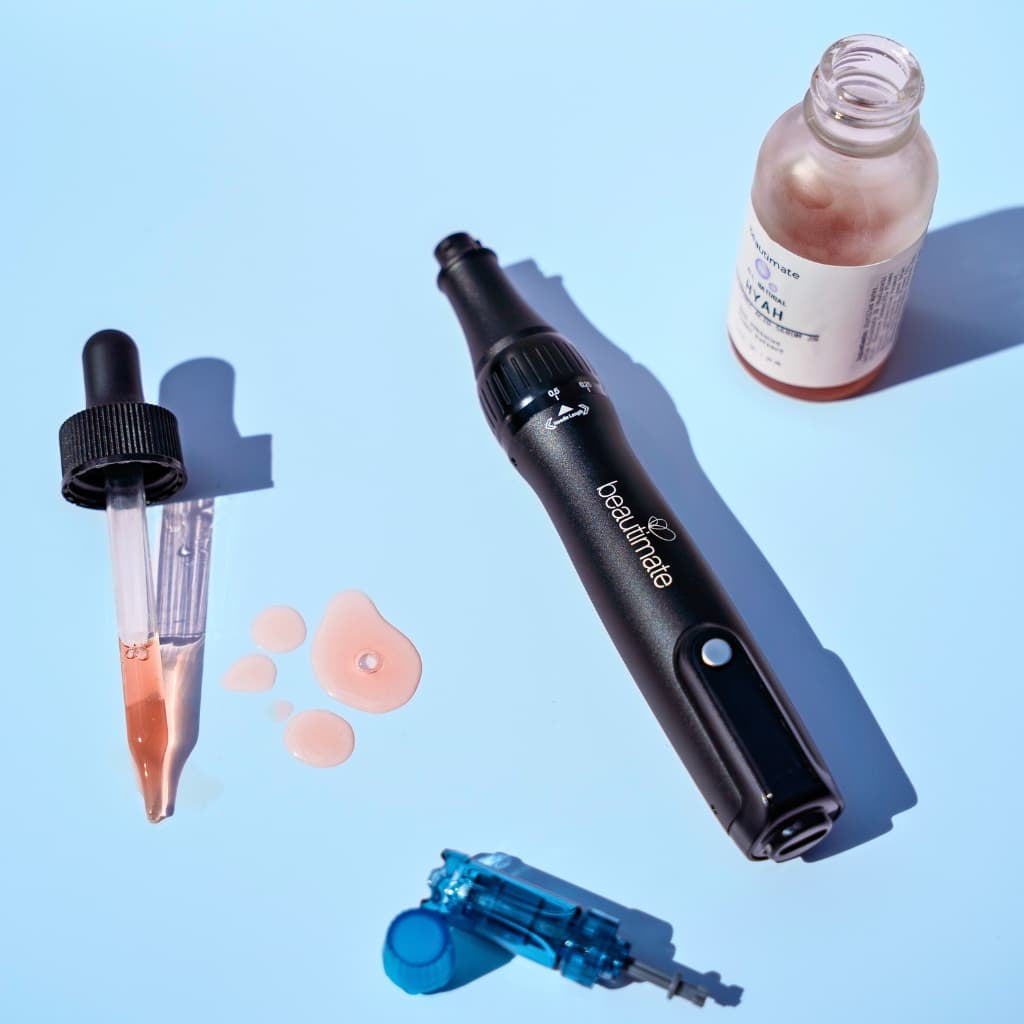
Everything you need to start in one box: the adjustable Microneedle Pen, a bottle of Hyah Serum for glide and aftercare, and sterile single-use cartridges. If you want the fuller set-up, the Complete Microneedling System adds extra cartridges so you're covered for months.
How a microneedling pen is different from a stamp or roller
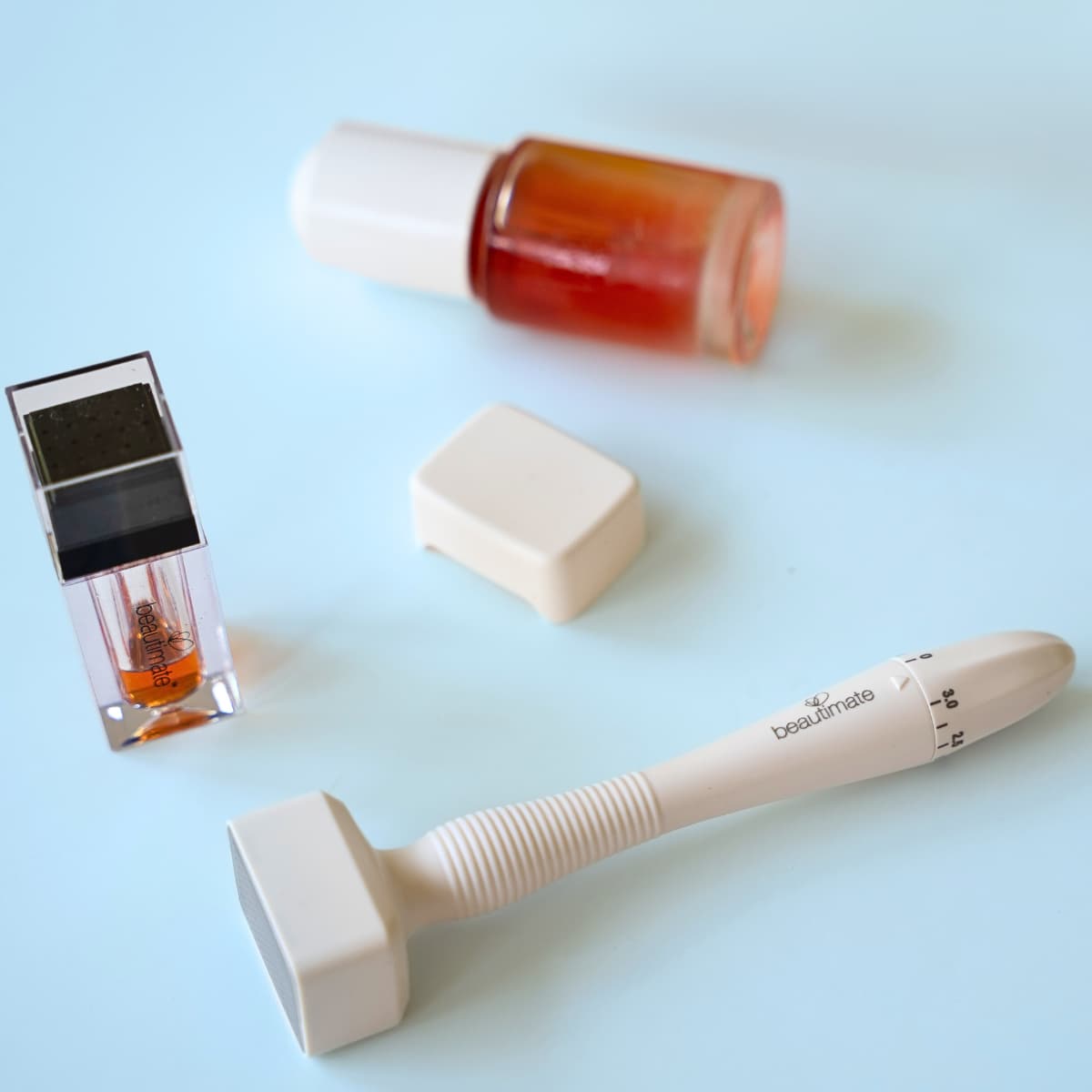
All three tools create the same kind of tiny channels in the skin — the difference is control. A roller drags at an angle, a stamp presses straight down by hand, and a pen uses a motor to press a cluster of needles straight in and out very quickly at a fixed depth.
That fixed, vertical motion is the pen's big advantage: more even coverage, less tearing, and far less reliance on your own pressure. Microneedling is commonly used to support smoother-looking skin and improve the appearance of texture, and it may help your serums absorb better — the pen simply makes the technique more repeatable. If you're still choosing between tools, our derma stamp vs. derma roller guide breaks down the trade-offs in detail. And if it is specifically the pen versus a stamp you are weighing up, we put them head to head in Microneedling Pen vs. Derma Stamp.
What you'll need before you start
Set everything out before you begin so you're not fumbling mid-session. Here's the short list:
- A microneedling pen with a charged battery
- A fresh, sterile cartridge (single-use)
- A gentle cleanser and clean towel
- Hyah Serum (hyaluronic acid) for glide and aftercare
- 70% isopropyl alcohol to sanitize the pen body
- Clean hands and clean, dry skin
Before you start
Start with clean skin, clean hands, and a fresh, sterile cartridge. The needle cartridges are single-use and come individually sealed and EO-sterilized — always snap in a new one for each session. Never reuse a cartridge, and never share one. When you run low, grab more Beautimate Pen Cartridges so you always have a sterile one ready.
Keep your setup simple: a gentle cleanser, good lighting, a clean towel, a fresh cartridge, and a hydrating serum for afterward. Give yourself enough time that you're not rushing — rushed sessions are where technique slips.

Choosing your needle depth
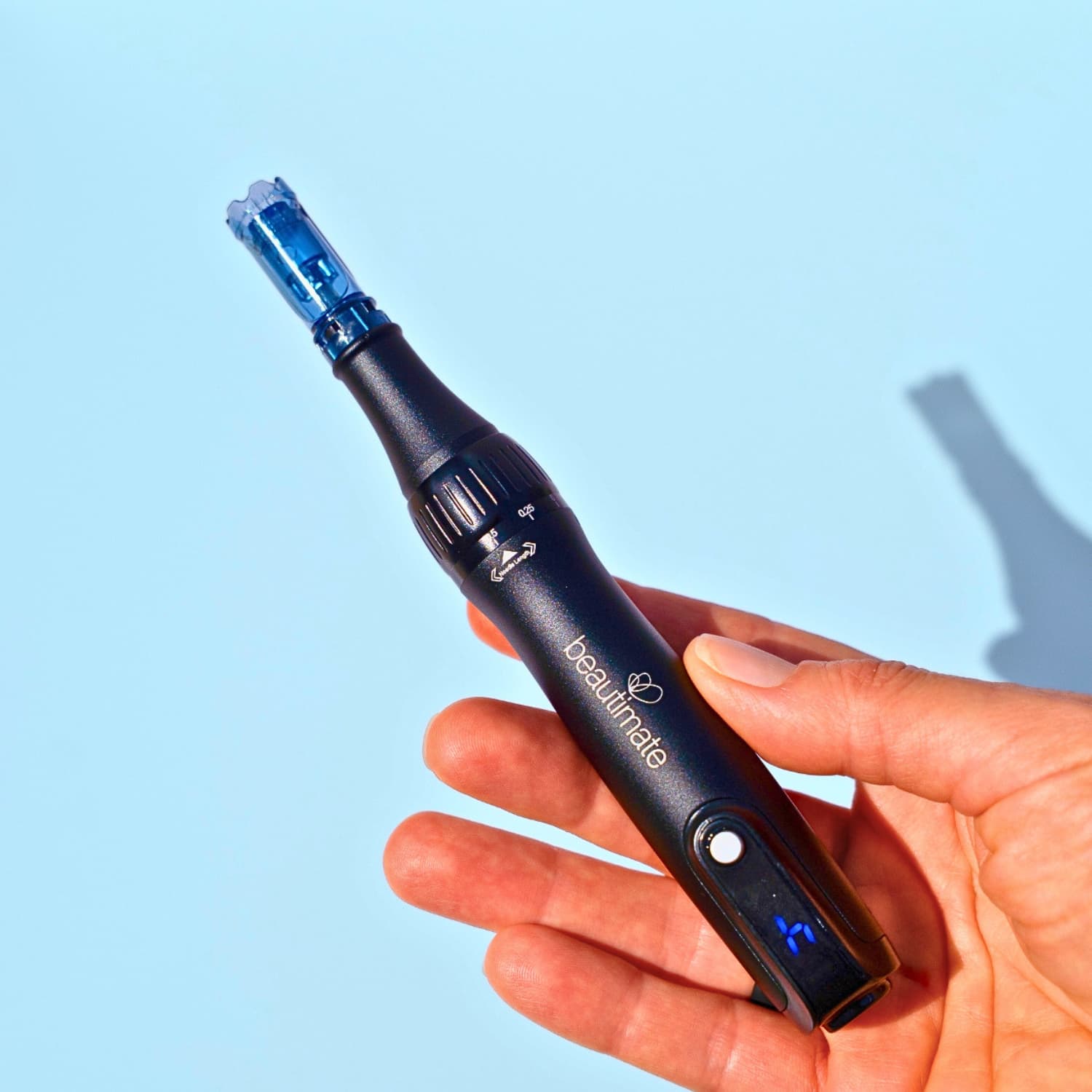
Depth is where the pen shines, because you dial it in once and it stays consistent for the whole session. The Beautimate Microneedle Pen adjusts from 0 to 0.5 mm — the range built for safe, effective at-home use, where the focus is glow, product absorption, and gradual texture support. Choose your depth based on the goal and the area — thinner skin (around the eyes, forehead) needs a shorter depth than thicker areas.
| Goal | Depth setting | General rhythm |
|---|---|---|
| First sessions / sensitive areas (eyes, forehead) | 0.25 mm | About weekly |
| Product absorption / everyday glow | 0.25–0.5 mm | About weekly |
| Fine lines / early texture support | 0.5 mm | Every 1–2 weeks |
| Scalp (hair-care routine) | 0.5 mm | Follow a dedicated scalp cadence |
How to hold and glide the pen
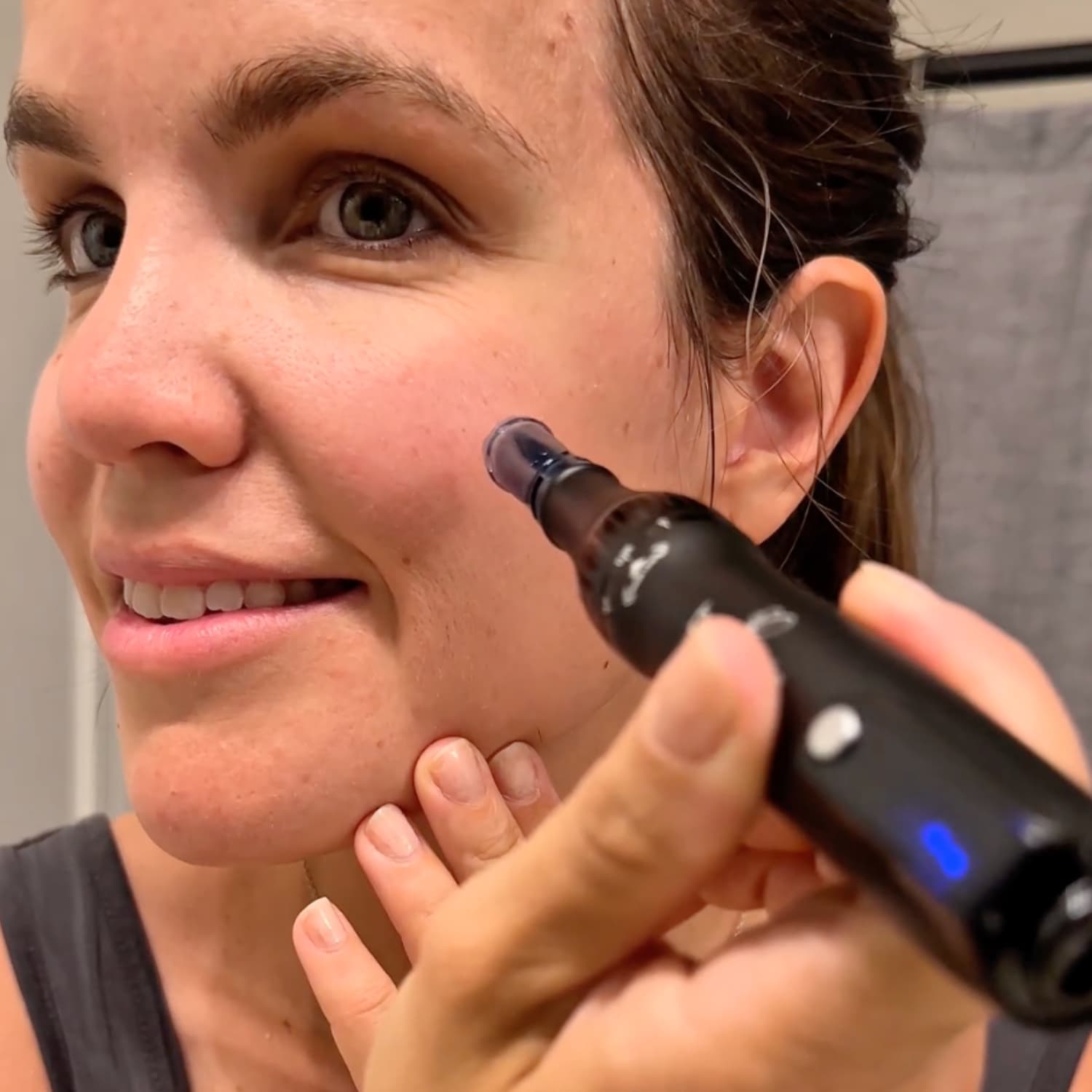
Hold the pen like a pen — upright, at roughly 90 degrees to the skin, resting lightly in your hand. You are not pressing it in; the motor does that. Your only job is to keep it perpendicular and move it at a steady, gentle pace.
Turn the pen on, rest the tip flat against the skin, and glide it across one small section using light, even passes. Let the needles do the work — no downward force needed. If the tip drags or you feel scratching, ease off and keep it vertical.
How to cover the face evenly
The easiest way to stay even is to divide the face into zones: forehead, each cheek, nose, chin, and jawline. Work one zone at a time so you don't lose track or over-treat a spot.
- Rest the powered-on pen flat against the skin at 90 degrees.
- Glide in slow, straight lines across the zone (horizontal passes).
- Go back over the same zone in vertical passes.
- Finish with light diagonal passes for full coverage (a simple cross-hatch).
- Move to the next zone and repeat until the whole face is covered once or twice.

Around curved areas like the jawline, the sides of the nose, and the hairline, slow down and keep the tip flush with the skin. Avoid the delicate area right on the eyelid, and never run the pen over active breakouts, cold sores, or irritated skin.
Using a serum with your pen
A thin layer of a simple, microneedling-safe serum helps the tip glide and supports comfort. Right before and right after, hyaluronic acid is a reliable, gentle choice — which is why we pair the pen with Hyah Serum. Skip strong actives (acids, vitamin C, retinoids) during and immediately after a session — those come later, once skin has settled.

For the full breakdown of what to apply afterward, see our guide on what serum to use after microneedling.
Safety precautions (read before your first session)
The pen is beginner-friendly, but microneedling still breaks the skin barrier. A few rules keep it safe:
- Always use a fresh, sterile cartridge. One session, one cartridge. Never reuse or share.
- Sanitize the pen body (not the cartridge) by wiping the head with 70% isopropyl alcohol before and after — do not submerge the motorized handle in liquid.
- Never treat over active acne, cold sores, eczema, psoriasis, sunburn, open wounds, or moles.
- Start shallow. 0.25–0.5 mm for the first several sessions.
- Do a patch test if you have sensitive or reactive skin.
- Skip it if you're pregnant or nursing, on isotretinoin (Accutane) or within 6 months of stopping, prone to keloid scarring, or have an active skin infection — check with a professional first.
- No strong actives or sun for at least 24 hours afterward. Sunscreen daily.
What the first hour, first day, and first week should look like
In the first hour: hydration and clean hands off your face. Mild redness or a warm, flushed feeling is normal and usually settles within a day. In the first 24 hours: avoid heavy workouts, direct sun, makeup, exfoliating acids, and retinoids. Skip anything that stings.
Over the next few days, stay gentle. Reapply a hydrating serum as needed, keep the routine minimal, and use sunscreen every morning. Let your skin fully settle before returning to a more active routine.
When to use the pen again
- 0.25 mm: around once a week.
- 0.5 mm: every 1–2 weeks.
- Scalp routine: follow a dedicated cadence rather than your facial one.
- If skin still feels irritated or looks inflamed, wait longer.
Common mistakes to avoid
- Pressing down on the pen — let the motor do the work; you just guide it.
- Holding it at an angle instead of upright at 90 degrees.
- Reusing a cartridge or skipping sanitizing the pen head.
- Going too deep too soon — more depth does not mean better results.
- Running the pen over active acne, irritation, or broken skin.
- Applying strong acids, vitamin C, or retinoids too soon after a session.
- Overcomplicating aftercare — simple hydration is smarter.
FAQ
Does a microneedling pen hurt?
At the pen's at-home depths (0.25–0.5 mm) most people feel a light vibration and a prickly sensation rather than pain. Bonier areas feel a little more intense — keep the depth and pace gentle and it stays comfortable.
Do I need numbing cream with a microneedling pen?
For most people, no. At the pen's at-home depths (0.25–0.5 mm) it feels like a light prickle or vibration rather than real pain, so numbing cream usually isn't necessary — and skipping it means you keep full feedback on pressure and sensitive spots, which actually helps you stay gentle. If you're working over a bonier or more sensitive area at 0.5 mm and want a little extra comfort, you can apply a thin layer of an over-the-counter lidocaine numbing cream about 20–30 minutes beforehand, then wipe it off completely and cleanse the skin before you start — never microneedle over a layer of numbing cream. Do a patch test first if your skin is reactive, and when in doubt, start at 0.25 mm instead of reaching for numbing cream.
How often should I use a microneedling pen?
It depends on depth. The lightest setting (0.25 mm) can be used about weekly; 0.5 mm is best every 1–2 weeks. If your skin still looks or feels irritated, wait longer before your next session.
Should I use serum before or after microneedling?
Both. A thin layer of a gentle hyaluronic acid serum like Hyah Serum before helps the tip glide, and reapplying afterward supports recovery. Save strong actives (acids, vitamin C, retinoids) for later — not during or right after a session.
How long does redness last after using a microneedling pen?
Mild redness or a warm, flushed look is common and usually settles within a day at shallow depths. Deeper sessions can stay pink a little longer. If redness, swelling, or irritation lasts well beyond a day or two, ease off on depth and frequency and give your skin more time to recover.
Can I use a microneedling pen on my scalp?
Yes — many people use a pen on the scalp to support their hair-care routine, typically at 0.5 mm on a dedicated cadence. For scalp sessions, pair it with our Rosemary Oil Scalp Serum instead of a facial serum. Follow a scalp-specific routine rather than your facial one, and keep cartridges sterile and single-use.
Can darker skin tones use a microneedling pen?
Generally yes. Because microneedling doesn't rely on heat or light the way some lasers do, it's often considered suitable across a range of skin tones. That said, deeper or aggressive treatment can raise the risk of post-inflammatory pigmentation on melanin-rich skin, so start shallow (0.25–0.5 mm), keep sessions gentle, protect with daily sunscreen, and check with a professional if you have any concerns.
Do I need a new cartridge every time?
Yes. Cartridges are single-use and sterile for a reason — always snap in a fresh one and dispose of it after the session. Keep a supply of replacement cartridges on hand so you never have to reuse one.
What depth should a beginner start with?
Start at 0.25 mm for your first several sessions, then increase to 0.5 mm only once you know how your skin reacts.
What should I use after?
A simple hydrating serum such as Hyah Serum and a gentle moisturizer. Keep actives out of the routine for at least 24 hours.
Which pen should I use?
The Beautimate Microneedle Pen is our adjustable-depth, at-home microneedling pen with sterile single-use cartridges — built specifically for controlled, beginner-friendly use.
Choose the right microneedling routine
Not sure where to start? Pick the path that fits you:
- New to microneedling? Start with the Microneedling Starter Kit — pen, Hyah Serum, and cartridges in one box.
- Want everything in one package? The Complete Microneedling System adds extra cartridges so you're set for months.
- Just need the device? Grab the Microneedle Pen on its own.
- Running low? Restock replacement cartridges anytime.
This article is for general educational purposes and isn't medical advice. If you have a skin condition or any concerns, check with a qualified professional before microneedling at home.