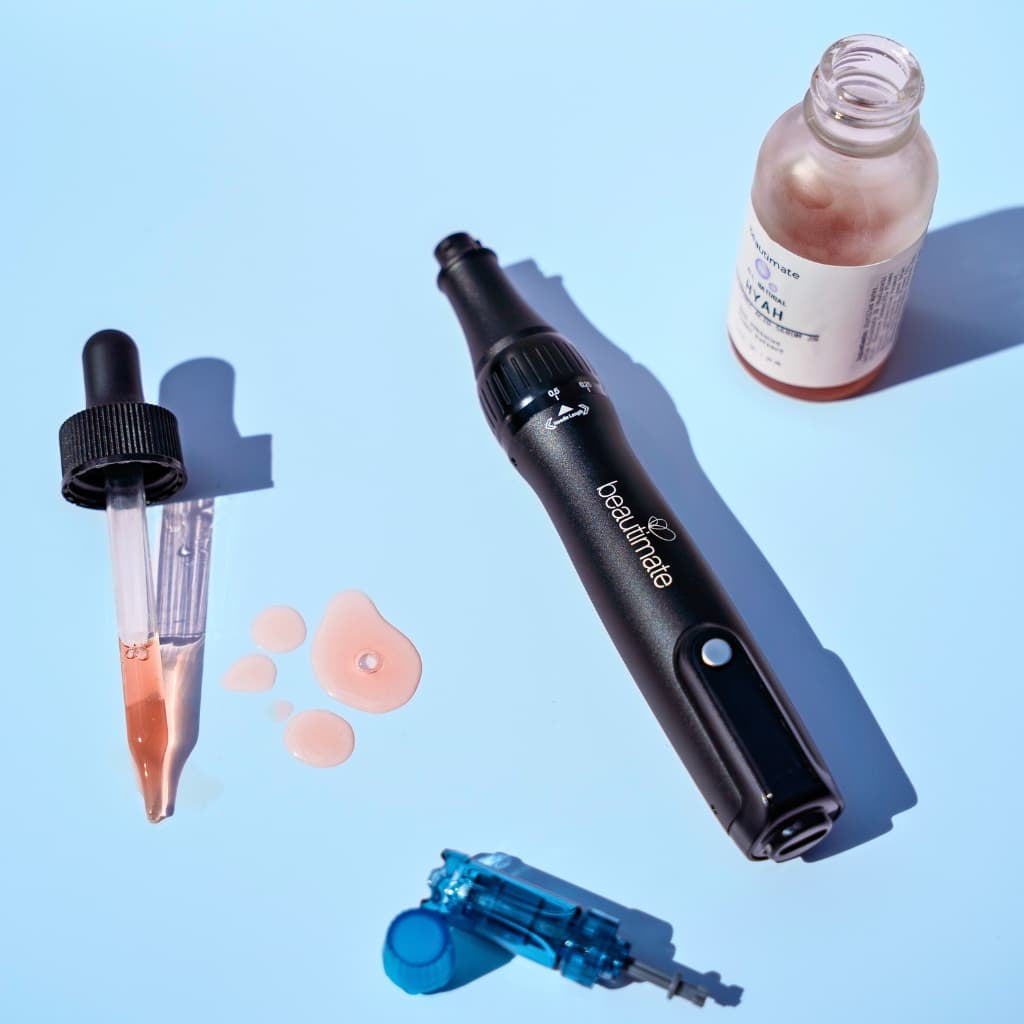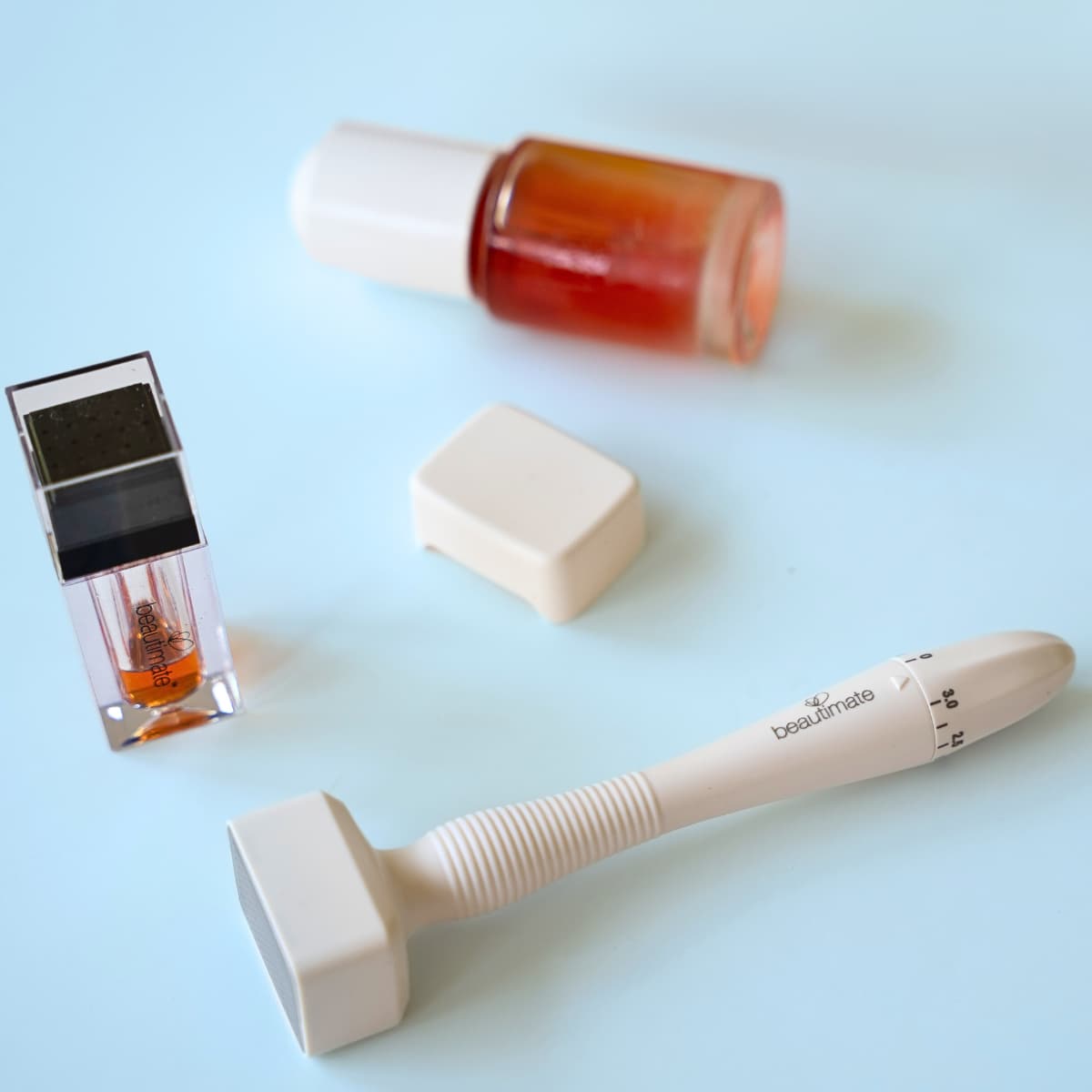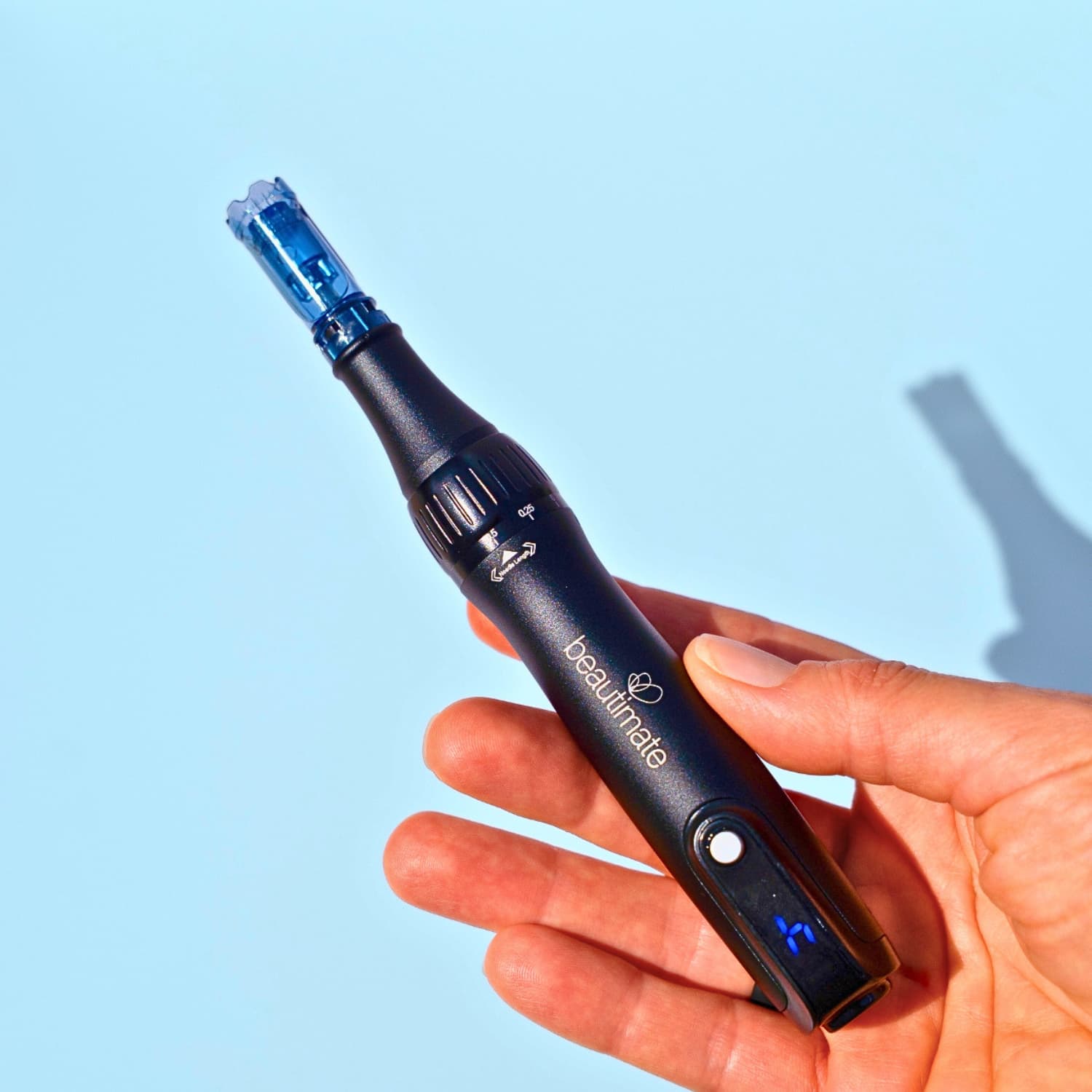

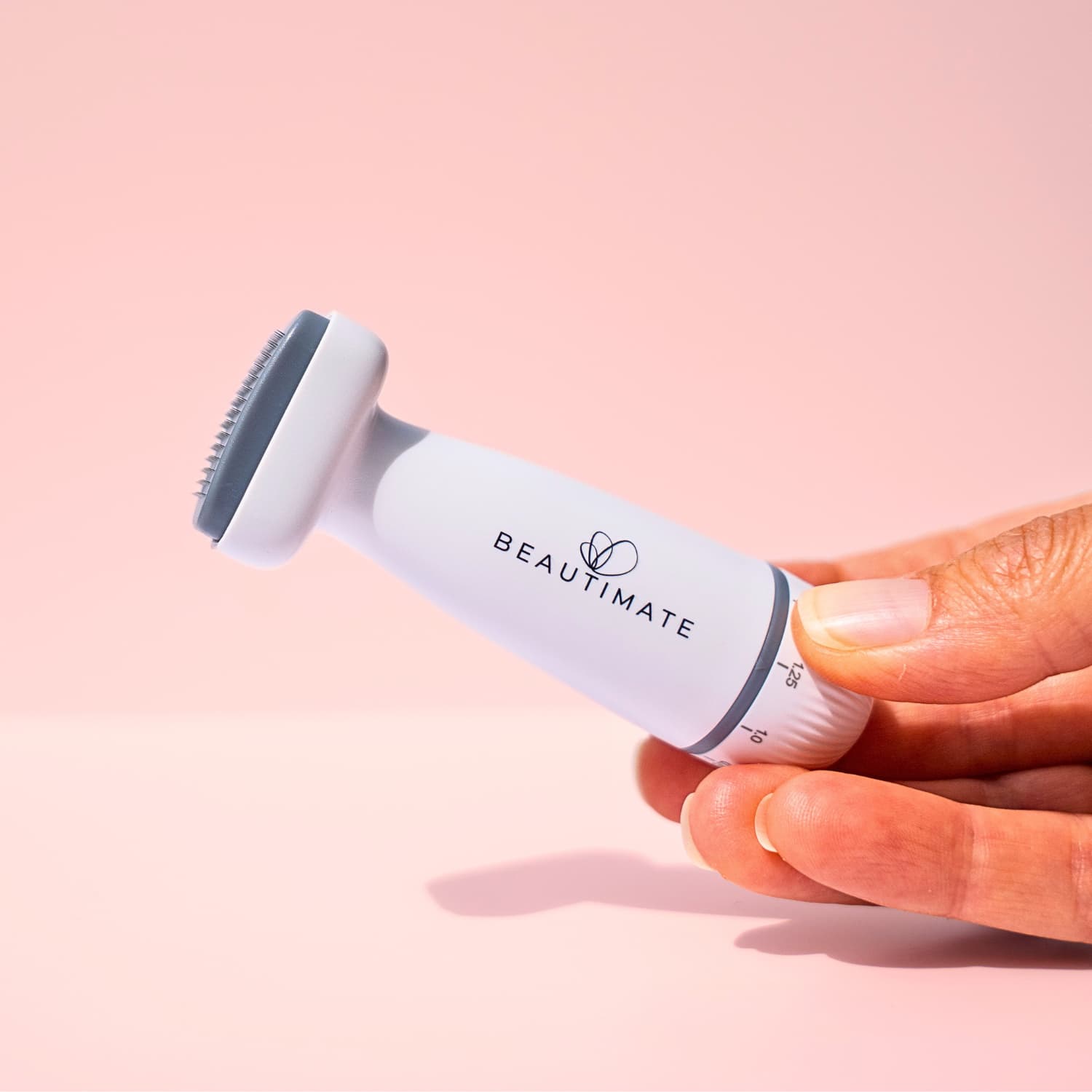
A derma stamp is a handheld microneedling tool with a flat, stamp-shaped head of fine, vertical needles that you press straight down onto the skin to create micro-channels. Unlike a derma roller — which you roll across the skin — a stamp presses straight down, for cleaner micro-channels, less skin pulling, and more precise control on areas like the hairline, under-eyes, and isolated scars. Those tiny channels trigger your skin's natural repair response — boosting collagen and elastin — and temporarily let serums absorb far more effectively.
Last updated: June 2026
If you've been researching at-home microneedling, you've probably run into the term "derma stamp" — and wondered what it actually is, how it's different from a derma roller, and whether it's safe to use on your face. This guide answers all of that in plain language, so you can decide if a derma stamp is right for your skin and pick the correct needle size with confidence.

Shop the Adjustable Derma Stamp →
What a derma stamp actually does
Microneedling works through a process called collagen induction therapy. When fine needles create controlled micro-injuries in the skin, the body responds by producing new collagen and elastin — the structural proteins that keep skin firm, smooth, and elastic (StatPearls, NIH). A 2018 clinical study in the Journal of Clinical and Aesthetic Dermatology found that a series of microneedling sessions produced statistically significant improvements in facial wrinkles, skin laxity, and texture, with minimal downtime and well-tolerated side effects (JCAD, 2018).
A derma stamp does this the same way a professional microneedling pen does, just in a simple, manual format you control by hand. Because you stamp straight down rather than dragging, it tends to be gentler and more precise than a rolling device — which is exactly why a lot of people choose it for the face.
Common reasons people use a derma stamp
- Fine lines and early wrinkles — collagen stimulation helps soften them over time
- Acne scars and uneven texture — one of microneedling's most studied uses
- Enlarged pores and dull skin — improved cell turnover and a smoother surface
- Better serum absorption — micro-channels let actives penetrate deeper (more on this below)
- Targeted spots — the stamp shape makes it easy to treat small, specific areas a roller can't
Derma stamp vs. derma roller: what's the difference?
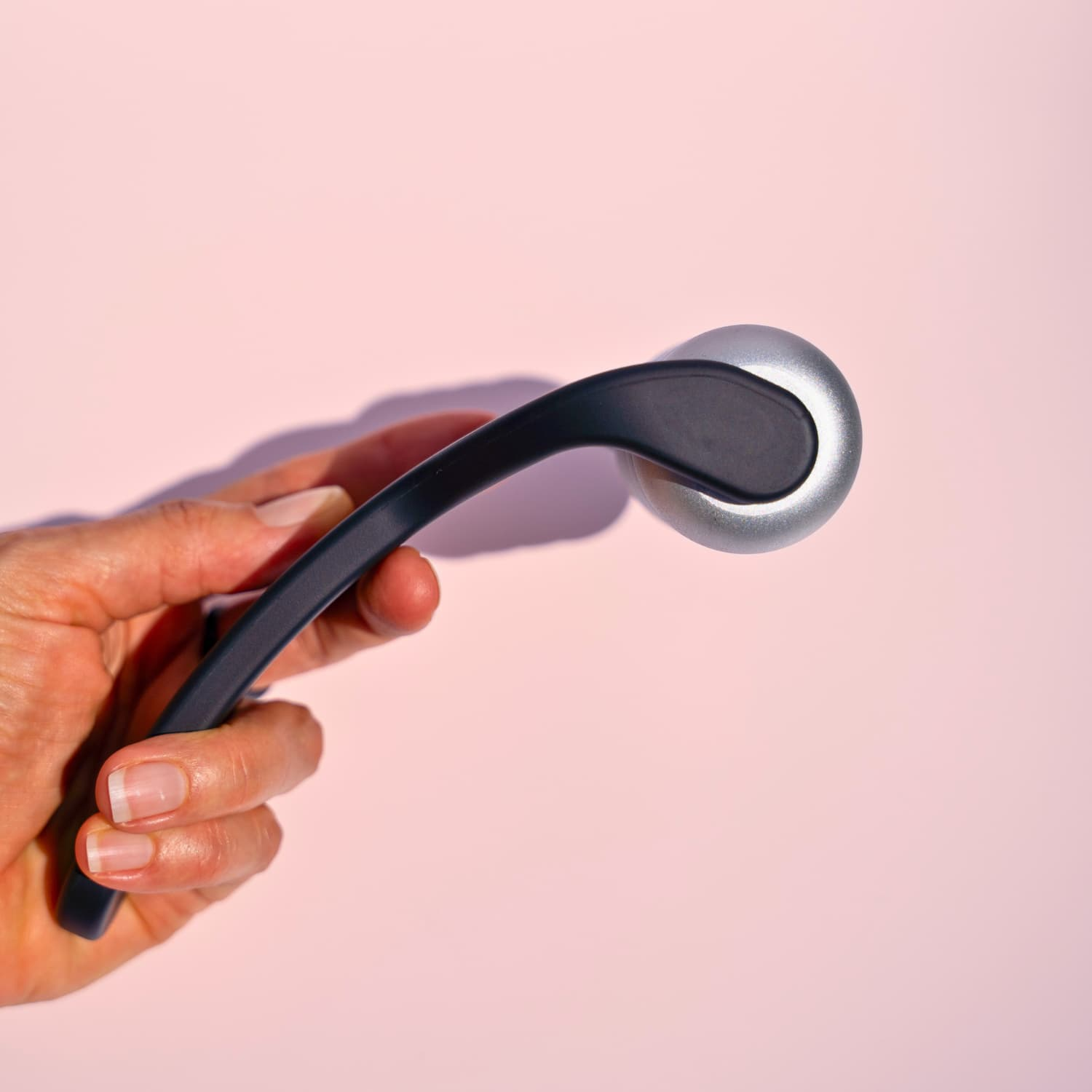
This is the question we get most, so here's the short version. A derma roller has needles on a rotating wheel that you roll across the skin. A derma stamp has needles on a flat head you press straight down.
| Derma stamp | Derma roller | |
|---|---|---|
| Motion | Press straight down | Roll across skin |
| Needle entry | Vertical, clean | Angled (can tear slightly) |
| Precision | High — great for targeted areas | Lower — better for large areas |
| Best for | Face, scars, spot-treatment | Scalp, body, broad zones |
The stamp's vertical entry is generally considered gentler on the skin because the needles go in and come out at the same angle, rather than dragging. For a full breakdown, see our complete guide: Derma Stamp vs. Derma Roller: Which Is Better?
Wondering how a stamp compares to a motorized pen instead? That is a different trade-off — manual control versus motor-driven consistency. We break it down in Microneedling Pen vs. Derma Stamp: Which Is Right for You?
What needle size (depth) should you use?

Needle length is the single most important choice you'll make, and it depends on where you're treating and what you're targeting. An adjustable derma stamp lets you dial the depth in, so you don't need to buy multiple tools.
| Needle depth | Best for | Frequency |
|---|---|---|
| 0.25 mm | Daily serum absorption, very gentle, all skin | Up to daily |
| 0.5 mm | Fine lines, pores, dull skin on the face | Every 1–2 weeks |
| 1.0 mm | Deeper texture concerns, mild scarring | Every 2–4 weeks |
| 1.5 mm+ | Body, scalp, deeper scarring (advanced) | Every 4–6 weeks |
For most people starting on the face, 0.5 mm is the sweet spot — effective enough to stimulate collagen, but conservative enough to keep downtime minimal. Start shallow, see how your skin responds, and only go deeper as you gain experience. For a deeper look at choosing between depths, see our Derma Stamp Size Guide: 0.5mm vs 1.0mm vs 1.5mm. If you want an adjustable tool that covers the full range, our Adjustable Derma Stamp lets you set the depth from 0.25 mm to 3.0 mm.
Can you use a derma stamp on your face?
Yes — the face is one of the most common places people use a derma stamp, and the stamp's precise, vertical motion makes it well suited to facial contours like around the nose, mouth, and forehead. The keys to using it safely on the face:
- Keep the depth conservative (0.25–0.5 mm for most facial use).
- Always start with clean, disinfected skin and a sterile needle head.
- Avoid active breakouts, irritated skin, eczema, or rosacea flare-ups.
- Don't overdo frequency — give skin time to heal between sessions.
For a complete step-by-step walkthrough, read our How to Use a Derma Stamp tutorial.
What to apply after derma stamping

This is where a derma stamp really earns its place in a routine. Immediately after microneedling, those micro-channels dramatically increase how well your skin absorbs whatever you apply next — so what you put on matters.
Right after a session, reach for gentle, hydrating, barrier-supporting ingredients: hyaluronic acid, peptides, and recovery serums. Avoid actives that can sting or irritate freshly stamped skin — high-concentration vitamin C, retinol, AHAs/BHAs, and fragranced products — for at least 24 hours.
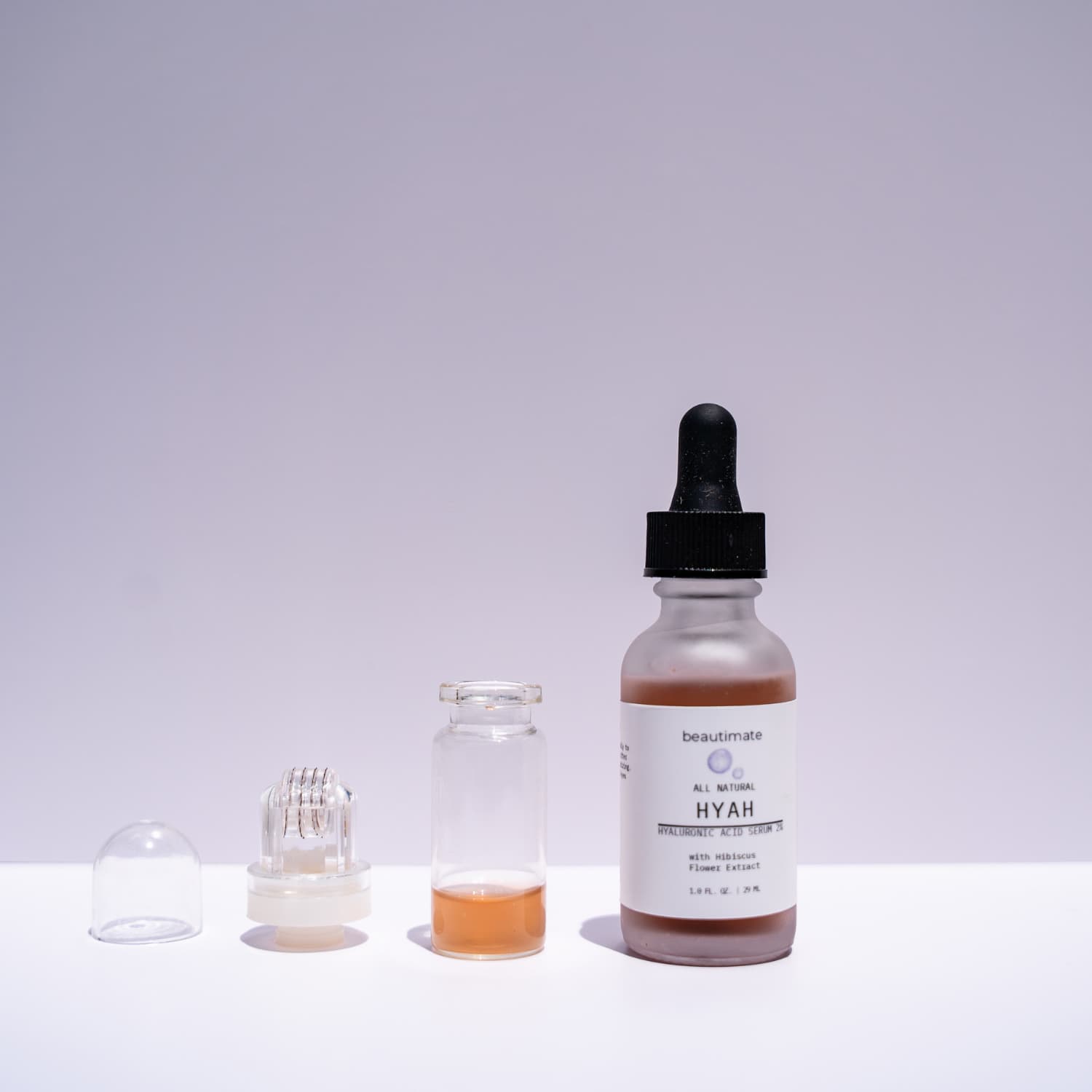
Our Hyah Serum was formulated specifically for post-microneedling use. For the full breakdown of what to apply (and when), see What Serum to Use After Microneedling.
How to choose the best derma stamp
When you're comparing options, look for:
- Adjustable depth — one tool that covers 0.25–1.5 mm+ is far more versatile (and economical) than fixed-depth stamps
- High-quality needles — surgical-grade stainless steel or titanium that won't bend or dull
- Replaceable heads — needles dull with use; replaceable heads keep treatments effective and hygienic
- A trusted brand with clear instructions — microneedling is safe when done correctly, so guidance matters
Beautimate's Adjustable Derma Stamp checks all of these boxes, with adjustable depth and surgical-grade needles designed for at-home use.
Shop the Adjustable Derma Stamp →
Is derma stamping safe?
Used correctly, at-home derma stamping at conservative depths is widely considered safe for most healthy skin. Microneedling has been studied extensively for scarring, hair loss, and skin rejuvenation, with a strong safety profile when proper hygiene and depth are observed. A 2021 literature review of percutaneous collagen induction therapy concluded it is a promising, minimally invasive option for treating scars and photoaged skin, stimulating collagen deposition without the pigmentation risks associated with lasers and peels (Aesthetic Plastic Surgery, 2021).
That said, skip derma stamping if you have active acne or infections, eczema or psoriasis in the treatment area, a history of keloid scarring, or if you're pregnant — and check with a dermatologist if you're unsure. Always sterilize your tool before and after, and never share heads.
Frequently asked questions
Does a derma stamp hurt?
At shallow depths (0.25–0.5 mm), most people feel only light prickling. Deeper settings can be more uncomfortable; a numbing cream is sometimes used for deeper, longer sessions.
How often should I use a derma stamp?
It depends on depth. Very shallow (0.25 mm) can be used up to daily; 0.5 mm every 1–2 weeks; deeper settings need more recovery time (every 2–6 weeks). Always let skin fully heal between sessions.
How long until I see results?
Some glow and serum-absorption benefits are immediate, but collagen-driven changes (texture, fine lines, scars) build over weeks to months of consistent, properly spaced sessions.
Derma stamp or derma roller — which should a beginner buy?
For facial use and targeted treatment, beginners often prefer a derma stamp for its precision and gentler vertical entry. See our full derma stamp vs. derma roller comparison.
Can I use a derma stamp for hair growth?
Yes — microneedling the scalp is a studied approach for stimulating hair follicles, often paired with rosemary oil. See our guide on microneedling for hair growth.
What needle size is best for the face?
0.5 mm is the most common starting point for facial concerns like fine lines and pores. Start shallow and increase only as your skin adapts.
Ready to start?
A derma stamp is one of the simplest, most precise ways to bring professional-style microneedling into your at-home routine. Choose an adjustable, high-quality tool, start conservative, and give your skin time to respond.