
Red, blue, and near-infrared are the three light colors used in most at-home LED masks, and each is commonly used for a different goal. Red supports the look of firmer, more even-toned skin; blue is used for the appearance of clearer skin; near-infrared reaches deeper to support healthy-looking skin. Here's what each does and how to choose.
Red vs blue vs infrared light — the quick version
- Red light (around 630nm) — commonly used to support the look of firmer, more even-toned, radiant-looking skin.
- Blue light (around 460nm) — commonly used to help the appearance of clearer skin, often chosen by people focused on breakouts.
- Near-infrared — a longer wavelength that reaches deeper into the skin, commonly used to support the look of healthy, resilient skin.
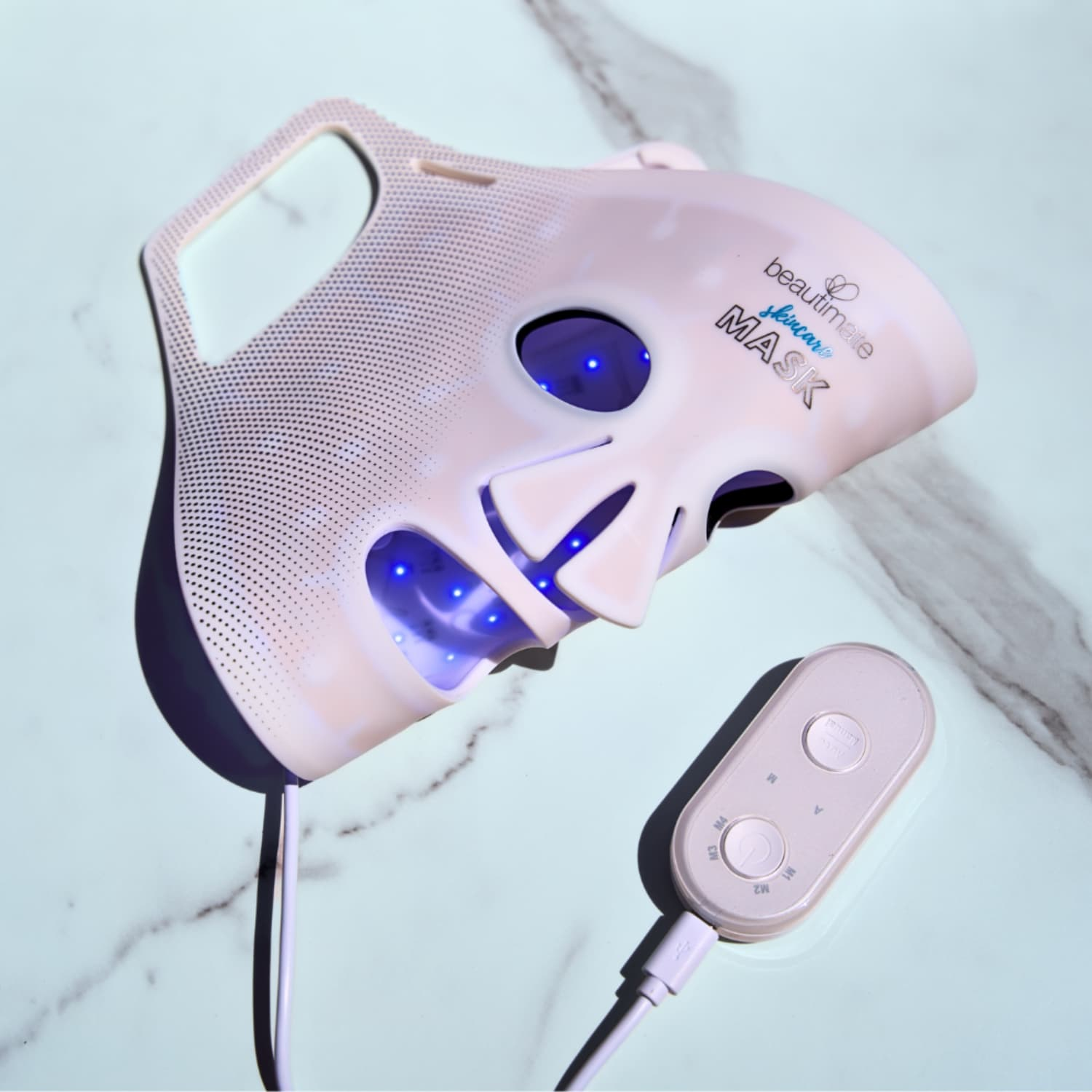
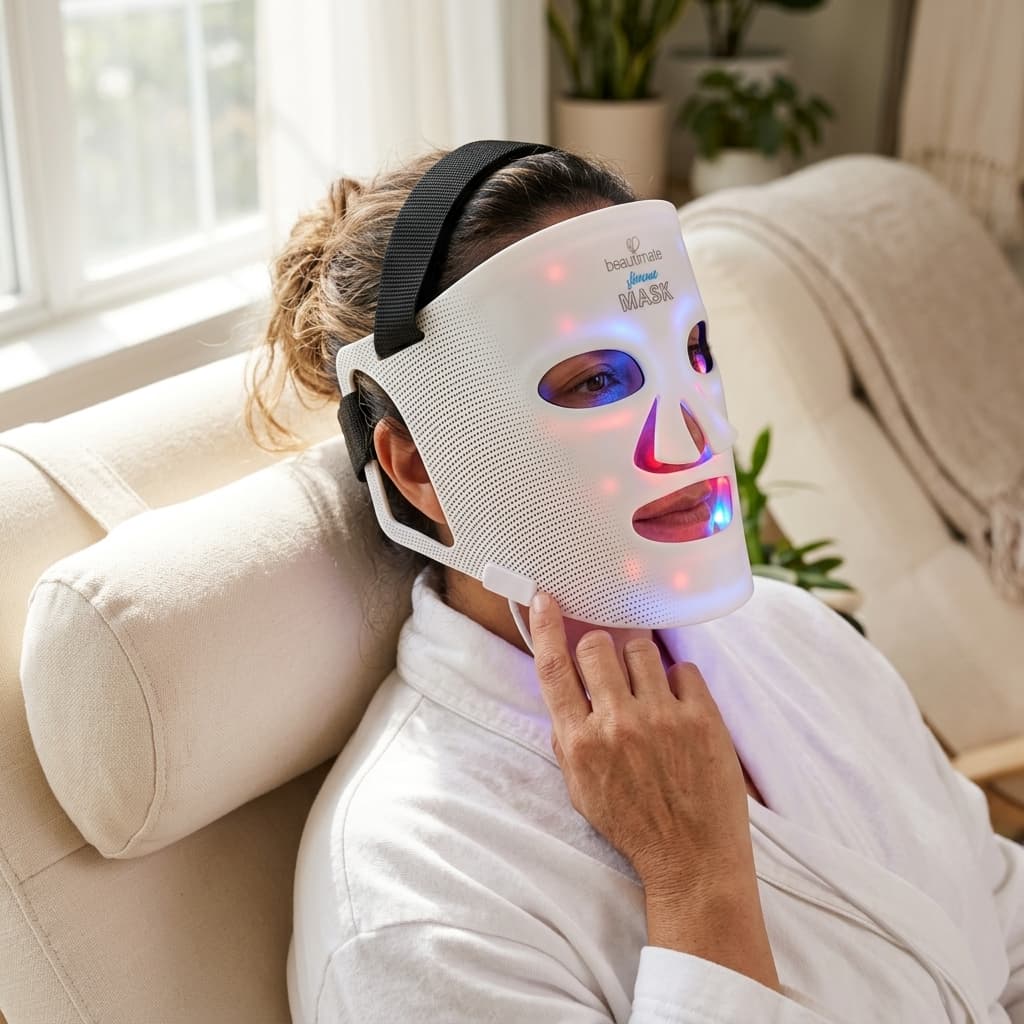
Masks like the Beautimate LED Light Therapy Mask include all three, plus a combined mode, so you can match the light to your goal without buying separate devices.

What does red light do?
Red light (around 630nm) is the most common wavelength for general skin appearance. It's commonly used to support the look of firmness, more even tone, and a healthy glow. It's a good default if you're focused on the overall look of aging or dullness.
What does blue light do?
Blue light (around 460nm) is commonly chosen by people focused on the appearance of clearer skin and breakout-prone areas. It works at a more surface level than red or infrared.
What does near-infrared light do?
Near-infrared has a longer wavelength that penetrates deeper than visible red or blue light. It's commonly used to support the look of healthy, resilient skin and is often combined with red in the same session.
Which light mode should you use?
- Overall skin appearance / signs of aging: red, or red + near-infrared combined.
- Breakout-prone skin: blue.
- Not sure: the combined mode gives you multiple wavelengths in one session.
Once you know which modes matter to you, it helps to compare devices on real specs. Our LED face mask comparison breaks down wavelengths, irradiance, and price across the popular brands.
Whatever mode you choose, the routine is the same: clean skin, a 10–15 minute session a few times a week, then a lightweight hyaluronic acid serum afterward to support hydration.

Frequently asked questions
What is the difference between red and blue LED light?
Red light (630nm) is commonly used to support the look of firmer, more even-toned skin. Blue light (460nm) is commonly used for the appearance of clearer skin.
What does near-infrared light do that red doesn't?
Near-infrared reaches deeper into the skin than visible red light and is commonly used to support the look of healthy, resilient skin. Many people use it combined with red.
Can you use red and blue light together?
Yes — a combined mode runs multiple wavelengths in one session, which is convenient if you have more than one goal.
Which LED color is best for anti-aging appearance?
Red, often paired with near-infrared, is the most common choice for the general look of firmness and even tone.
This article is for general educational purposes and is not medical advice. LED light therapy supports the appearance of skin and is not intended to diagnose, treat, cure, or prevent any disease. Results vary from person to person.